

Pet Store Wars
December 23rd, 2021 by Jake StofanPosted in State News |
No Comments »
Posted in State News |
No Comments »
Posted in State News |
No Comments »
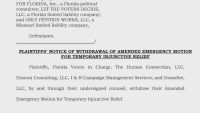
A legal battle between backers of a citizen initiative to expand casino gaming and groups with ties to the Seminole Tribe is heating up.
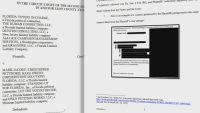
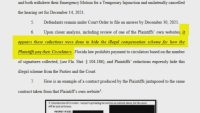
In recent court filing, the defendants accused Grassfire LLC, a plaintiff in the case, of paying its employees based on the number of petitions they collect.
It was just two years ago state lawmakers outlawed the practice.
Under the 2019 law, paying petition circulators based on the number of signatures they collect is first degree misdemeanor.
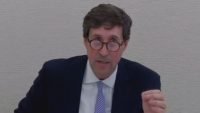
Representative Mike Beltran was a co-sponsor.
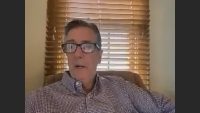
“We don’t allow people to do that because it corrupts the process. Then people have an incentive to fabricate or doctor additional signatures in order to make additional money,” said Beltran.
The new court filings the legal battle between supporters and opponents of a casino gaming citizen initiative suggest the practice hasn’t stopped.
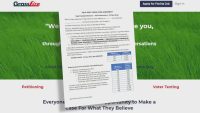
A sample employee contract found on Grassfire LLC’s website offers bonuses for employees as they reach petition benchmarks.
“They say they want core values and the courage to do the right thing and on the face of the document they’re violating the law,” said Beltran.
Rep Beltran argued the intent of the law is clear.
“It doesn’t say if you pay them an hourly wage you can give them a bonus. It doesn’t say that you have to pay them a base hourly wage. It doesn’t say anything… It says you may not compensate them based upon the number of petition forms gathered,” said Beltran.
In the court filing, it’s claimed whistleblowers have reported Grassfire LLC to authorities.
We reached out to the Secretary of State, Attorney General and Florida Elections Commission regarding the accusations, but our inquiries have gone unanswered.
The Governor’s Office declined to weigh in on the specific allegations, but highlighted the Governor’s push for lawmakers to create an election integrity unit in the upcoming legislative session.
“The Governor is absolutely committed to legislation that would empower the Department of State with the resources and personnel to aggressively investigate election-related crimes,” said the Governor’s Press Secretary Christina Pushaw.
We reached out to Florida Voters in Charge, the group sponsoring the citizen initiative Grassfire was collecting signatures for, and received an emailed statement.
“The Defendants’ allegations are meritless, and are nothing more than an attempt to divert attention from their aggressive attempts to prevent Florida voters from having the opportunity to vote to end the Seminole Tribe’s monopoly over Florida casino gaming,” said attorney Jim McKee.
The casino gaming initiative has collected just over 300,000 valid signatures, but that’s still roughly 600,000 shy of the 891,589 signatures needed by February 1st to make the ballot.
Posted in State News |
No Comments »
Every year since 2009, Florida homeowners have been paying to shore up the state’s hurricane fund.
Now experts in the industry are making the case the fund is sound and the charges amount to annual hurricane tax.
Lowering the collections could slow rising rates, which are expected to be one of the coming legislative session’s top issues.
In 1993, Florida set up its catastrophic hurricane fund following Hurricane Andrew.
The fund is a reinsurance asset to help companies pay claims after big storms.
“The Cat Fund has cash, lots of cash,” said Security First CEO Locke Burt.
In 2009, lawmakers added a rapid cash buildup feature to the fund.
Burt, called the cash buildup an annual hurricane tax on homeowners that has outlived its purpose.
“There is enough cash in the Florida Hurricane Catastrophe Fund to pay a hundred percent of all of the claims paid by the Cat fund since it was created in 1993,” said Burt.
Eliminating the rapid cash buildup could save every policy holder in the state $150 a year.
State Senator Jim Boyd pushed through insurance reforms last session.
He told us tackling Cat Fund changes may be too much for lawmakers this year, but he called the 20, 30 and 40 percent rate hikes seen buy consumers unsustainable.
Instead Boyd told us lawmakers are working on language to go after unscrupulous contractors who incentivize consumers to file claims.
It was a change made last year that is being challenged in court.
“I don’t think businesses that are kind of deceiving the public and using bribes, if you will, to get things done should be protected by that,” said Boyd.
Both the Insurance Company CEO and the State Senator said they believe changes made last year are starting to bear fruit by reducing the number of lawsuits being filed.
Boyd indicated we’ll likely see small changes to insurance regulations this coming year, not a major insurance overhaul.
At the same time, the rising premiums are starting to become a building issue for Democrats who want to be Governor.
Posted in State News |
No Comments »
The 52 private insurance companies writing polices in Florida lost a total of $847 million through the end of September, causing them to raise rates by 50 percent or more.
That’s forcing homeowners into Citizens, the state’s insurer of last resort, but if the state approves, those already in Citizens will also see double digit rate hikes.
With a Monday vote Citizens, the insurer of last resort in Florida, moved forward with across the board rate hikes of 11 percent for anyone who renews after August 1st 2022.
Citizens would then raise rates 12 percent across the board for renewals after January first 2023.
“The private carriers are non-renewing policies across the state. They are raising rates, high rates,” said Michael Peltier, a Citizens spokesperson.
Peltier told us lawsuits are driving the increases.
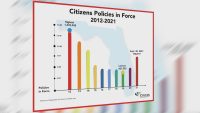
“Florida represents about 8 percent of the property insurance market across the country. However, at this time, we represent about 76 percent of all lawsuits relating to property insurance,” said Peltier.
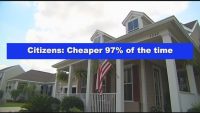
Even with the hikes, Citizens’ own study shows it’s the cheapest alternative 97 percent of the time.
Legislative changes earlier this year require a homeowner to accept a private insurer as long as it is no more than 20 percent higher than Citizens’ rates.
But even with the new criteria, Citizens policies are mushrooming.
“Since January, Citizens policy count has risen about 38 percent,” said Peltier.
Under the legislation passed earlier this year, rate hikes can grow one percent a year, up to a 15 percent across the board in 2026.
“Trying to do what they can to bring Citizens rates more in line with what the private market charges,” said Peltier.
And the 11 and 12 percent hikes approved by the Citizens Board for next year and the year after must still get the okay from the state’s Office of Insurance Regulation.
Lawmakers are expected to make tweaks to insurance regulations when they meet in January, but any changes could likely take a year or two before consumers see any relief from rising costs.
Posted in State News |
No Comments »
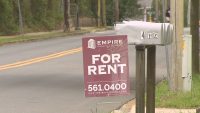
Democratic State lawmakers have called on the Governor to declare a state of emergency to help address Florida’s affordable housing crisis.
Regions of Florida have seen rent hikes of 14 and 20 percent since January.
Tampa has seen rents skyrocket 24 percent just since July, which is the highest increase in the nation.
“This has been a crisis many years in the making,” said State Representative Carlos Guillermo Smith.
Smith joined 23 other Democratic state lawmakers who signed a letter to the Governor requesting he declare a state of emergency.
They want him to direct the Attorney General to consider any rent increases higher than 10 percent price gouging.
“This is a tool that is often used by the Attorney General, for example during a state of emergency with a hurricane,” said Smith.
When asked about the letter Friday, the Governor put the blame on the federal government.
“We should forward it to Joe Biden and the White House because things are more expensive because of his policies,” said Governor Ron DeSantis.
The Governor also highlighted his budget proposal, which includes $355 million for affordable housing.
Mark Hendrickson with the Florida Association of Local Housing Finance Authorities told us the Governor’s proposal would be a substantial investment.
“It’s the biggest appropriation in 15 years,” said Hendrickson.
Democrats reject the idea the federal government is to blame.
Smith argued the money the Governor is proposing to spend is too little too late.
“That’s not enough. We need to be able to take bold action to substantially invest in affordable housing,” said Smith.
Last year state lawmakers committed to split doc stamp tax revenue between affordable housing and resiliency projects.
The upcoming legislative session will be the first test to see whether they follow through with that promise.
Even if lawmakers follow through with the Governor’s proposed spending plan, experts we’ve spoken with agree the affordable housing crisis isn’t ending anytime soon.
Posted in State News |
No Comments »

Posted in State News |
No Comments »
Posted in State News |
No Comments »
Posted in State News |
No Comments »
Posted in State News |
No Comments »

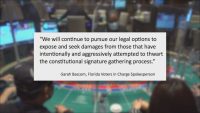
“We will continue to pursue our legal options to expose and seek damages from those that have intentionally and aggressively attempted to thwart the constitutional signature gathering process,” said Bascom.
They also claim to be on track to make the 2022 ballot, despite only having validated roughly 255,000 of the nearly 900,000 required signatures as of mid-afternoon Monday.
Posted in State News |
No Comments »
Posted in State News |
No Comments »
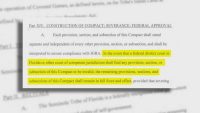
When lawmakers return in January and begin crafting the 2022 budget, they’ll be anticipating a $500 million hole, caused by the state’s compact with the Seminole Tribe being struck down by a federal judge.
A legal resolution isn’t likely to come before lawmakers gavel out in early March.
This spring, the Governor and the Legislature touted a historic deal with the Seminole Tribe that promised to bring in $500 million a year.
But with the compact currently entangled in a legal battle, lawmakers don’t plan to bank on that revenue when crafting the state budget.
“We’re gonna have to assume we’re not getting that $500 million,” said State Representative Randy Fine.
Fine said that $500 million could have gone a long way.
“To put even more money in reserves, or to cut taxes, or to spend more money on other critical priorities,” said Fine.
The compact was struck down because it allowed for sports betting off of tribal lands.
Governor Ron DeSantis said he expects a national push to have the ruling reversed.
“There’s a lot of indian tribes across the country who are looking at this decision saying, whoah, that was not something that was good,” said DeSantis.
Fine argues the compact was designed to survive, even if a portion was struck down.
He lays blame on the Biden Administration for failing to make that argument in court.
“It was either an intentional effort to hurt Floridians or some of the greatest legal malpractice in legal history,” said Fine.
While Republicans are blaming the Biden Administration for the undesirable ruling, Democrats in Florida say it’s ultimately Republicans who bare responsibility for the compact falling through.
“The fact that my colleagues on the right kept saying this was not an expansion of gambling was false and unfortunately a judge agreed,” said State Representative Anna Eskamani.
Before the compact was struck down the Tribe had already paid the state $75 million.
In an emailed statement, tidal spokesperson Gary Bitner said the tribe does plan to appeal the ruling.
“The Seminole Tribe looks forward to working with the State of Florida and the U.S. Department of Justice to aggressively defend the validity of the 2021 Compact before the Appeals Court, which has yet to rule on the merits of the 2021 Compact. The Seminole Tribe of Florida, the State of Florida and the United States have all taken the position that the 2021 Compact is legal,” said Bitner.
It’s unclear whether the tribe intends to keep paying as the court battle continues.
Posted in State News |
No Comments »
Governor Ron DeSantis has proposed spending $99.7 billion to run the state for the year beginning July 1st, 2022.
There is more money for schools, the environment and some tax breaks.
The biggest break could save motorists more than 25 cents a gallon for most of the second half of next year.
The Freedom First budget is how the Governor is billing his spending plan.
“Florida is clicking on all cylinders when it comes to economy and budget,” said DeSantis at the Thursday announcement.
The proposal is flush with billions in federal money, which the Governor wants to use to offset the state’s gas tax for five months starting in July.
“Which will be a cushion and a buffer against the rising gas prices we have seen,” said DeSantis.
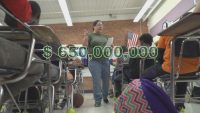
There is also $650 million for teacher raises, who along with police and other first responders, will also see thousand dollar bonuses.
“That’s over 175,000 individuals,” said DeSantis.
Other school employees could see only minimum hikes, which the Florida Education Association argues doesn’t go far enough.
“We are seeing a drain of the profession from teaches and bus drivers, to cafeteria workers and paraprofessionals,” said FEA President Andrew Spar.
Per student spending rises to a record $8,000 under the plan.
And the Governor is putting his foot down, demanding there be no tuition increases.
In a post-announcement news conference, Democrats said they will fight to do more more for average Floridians.
“Parents are scared because children have to wait in the dark for a bus that may or may not come pick them up,” said State Representative Angie Nixon.
But the Governor told us if Democrats had their way, Florida wouldn’t be able to afford what he is proposing.
“They would have locked down and cost hundreds of thousands of jobs. They criticized me for keeping the state open,” said DeSantis.
The Governor is also asking for a 30 percent increase in cancer research, more money for nursing homes, and more help for Alzheimers patients.
Florida currently has a $15 billion reserve that is expected to grow to $17 billion before the budget kicks in on July first.
Lawmakers still have to approve the proposal.
Some tweaks are inevitable, but since taking office, this Governor has gotten most everything he wants from lawmakers.
Posted in State News |
No Comments »
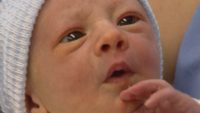
30 years ago Florida ranked third in the nation for the highest infant mortality rate, but thanks in large part to the work of Healthy Start, the state now ranks 28th.
The program, which offers free services to all pregnant women in Florida celebrated its 30th anniversary Wednesday.
Florida’s infant mortality rate has dropped by 32 percent since Healthy Start was created.
That equates to 638 lives saved last year alone.
“That’s approximately 30 kindergarten classes,” said CEO for the Florida Association of Healthy Start Coalitions Cathy Timuta.
Timuta at an event celebrating the program’s 30th birthday, said the program served more 129,000 pregnant women and 84,000 babies in 2020.
“We’re talking about real people and real families who have been impacted,” said Timuta.
Babies born to mothers who received Healthy Start services has an infant mortality rate of less than three per 1,000 births.
That’s more than 50 percent lower than the statewide average of six per 1,000 births.
The program got its start in 1991 under Governor Lawton Chiles.
“Who had a low birthweight grandchild himself,” said Jack Levine, founder of 4Generations Institute.
Levine has been a child advocated for four decades.
He said Healthy Start’s impact on the state has been undeniable.
“No state in the nation has had better achievement over these three decades,” said Levine.
One of Healthy Starts main missions to reduce racial disparities in infant and maternal mortality rates.
It was an issue given special attention in the last legislative session.
“It is our biggest challenge as a state and as a Healthy Start program,” said Timuta.
As part of the Legislature’s response, it extended postpartum Medicaid coverage from two to 12 months earlier this year.
It’s a $240 million endeavor Timuta believes will have a major impact.
“More families are going to be able to get services this year through Healthy Start, which is very exciting,” said Timuta.
And Healthy Start advocates said there’s an economic benefit to providing pre and postpartum services.
They claim for every $1 spent, the state saves $10 down the road.
Posted in State News |
No Comments »
copyright © 2016 by Capitol News Service | Powered by Wordpress | Hosted by LyonsHost.com